
Project: Air System
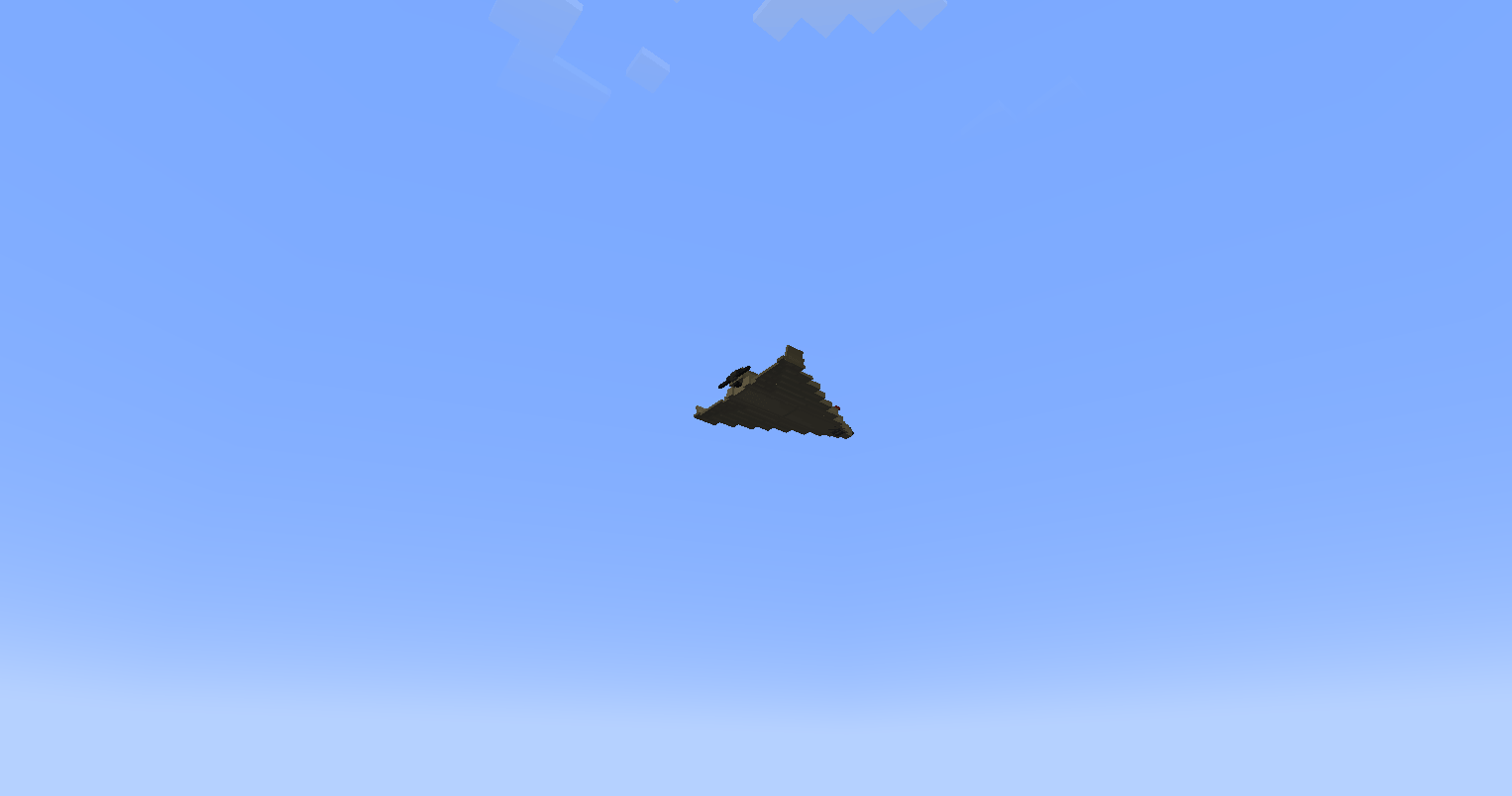
Adds Shaheds and other drones.
 查看大图
查看大图
Project AirSystem


A NeoForge 1.21.1 mod about the air picture: unmanned aircraft, an air raid alarm system and ground-based air defence. Works with TACZ as a soft dependency — the mod runs with or without it.
NeoForge is the only dependency. The models use the vanilla ModelPart system
and are animated in the renderer.
Drones are not entities. In the air a drone is an object inside
DroneFlightManager; on the ground it is a block with a block entity. The
reasoning is under "How it works".
What is in it
Drones (20 aircraft)
| Class | Aircraft |
|---|---|
| Shahed loitering munitions | Shahed-131, Shahed-136, Shahed-238 (jet) |
| Reconnaissance | Orlan-10, Orlan-30, Eleron-3, ZALA 421-16E, ZALA 421-08, Granat-4 |
| Strike and loitering | Lancet-1, Lancet-3, KUB-BLA, Inokhodets (Orion), S-70 Okhotnik |
| Ukrainian systems | Leleka-100, SHARK, PD-2, Liutyi (An-196), UJ-22 Airborne, RAM II UAV |
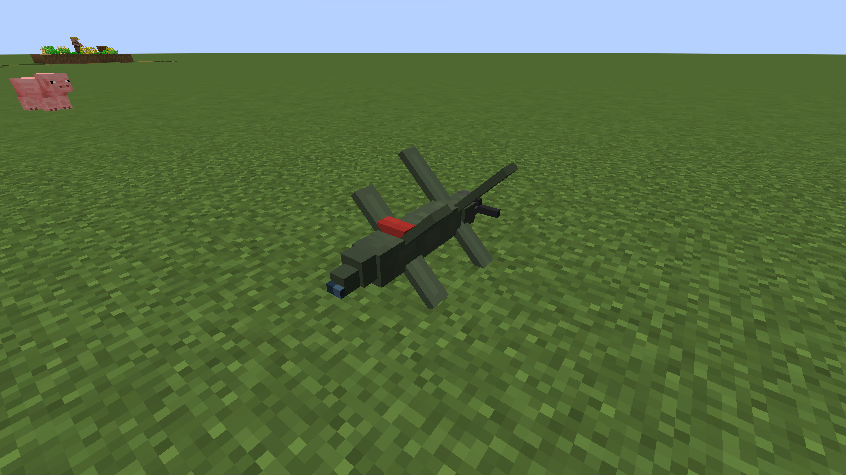
Every aircraft has its own model built to the proportions of the real thing: a
Shahed is a delta with fins on the tips and a pusher propeller, a Lancet has two
X wings, an Orlan is a conventional layout with the tail on a boom, the PD-2 is
an aeroplane with four lift rotors, the S-70 a flying wing with a turbojet.
Performance — speed, ceiling, toughness, warhead — lives in DroneKind and
differs from type to type.
The models carry the detail that is actually visible in flight and on the pad: a gimballed sensor with a lens window and a thermal channel, a pitot boom ahead of the nose, ailerons and elevons as separate strips along the trailing edge, a dorsal spine and access panels, navigation lights on the tips (red to port, green to starboard), intakes and exhaust stubs on piston types, warning stripes by the warhead. Types that land have real gear: tricycle legs and wheels on the aeroplane layouts, landing feet under the booms of the PD-2, a skid on the twin-boom aircraft and flying wings.
Anti-aircraft guns
- Gepard — tracked SPAAG, twin 35 mm guns, two radars.
- Slinger — compact remote weapon station, 30 mm.
- Terrahawk Paladin — container mount with a 360-degree radar, 30 mm.
- MANTIS — unmanned auto air defence: a 35 mm revolver cannon on a pedestal with its own masted radar and no crew at all.
The first three work two ways: a gunner sits at the sight (left click fires), or
Shift + right click switches to automatic. MANTIS always runs itself.
IFF. In automatic mode a mount knows where every drone took off from.
Anything launched within 70 blocks of the mount counts as friendly and is
never engaged, deliberately or by a stray burst. Everything launched further out
is tracked. The radius is configurable (turret.friendlyRadius).
Automatic fire misses. Every burst rolls a hit chance that falls off with
range and with target speed. On a failed roll the burst is deliberately walked
wide, and you can watch the tracers go past. The base chance is
turret.autoHitChance (0.55 by default), multiplied by the accuracy of the
individual mount.
Air raid alarm
- Alarm loudspeaker — wails, audible over 160 blocks. The sound is synthesised as a real electromechanical siren: the rotor chops the air (two ports at a ratio of 1.2 give the characteristic chord), the signal passes through a horn resonant at 1150 and 2300 Hz, and spin-up, coast-down, rotational amplitude modulation and urban reverberation are added.
- Air raid button — raises the alert and sounds the all-clear.
- Linking cable — binds loudspeakers to a button: click the loudspeaker, then the button. With nothing bound, a button drives every siren within 64 blocks.
Players within earshot get an "AIR RAID ALERT" banner on screen.
How it works
A Minecraft entity is convenient while it stays near a player. A drone flies kilometres away while the operator stays put, and at that point the entity gets in the way: it stops being tracked beyond the tracking radius, it ticks with the rest of the world, and it needs the client to "see" it. So the aircraft are built differently:
| State | What it is | What draws it |
|---|---|---|
| On the ground | airsystem:drone block with a block entity |
DroneBlockRenderer |
| Airborne | DroneFlight object in DroneFlightManager |
DroneFlightRenderer, in the world pass |
| Released bomb | Munition object in the same place |
the same renderer |
What that buys:
- Range. A flight is not tied to the entity tracking radius. The server
sends compact snapshots (
DroneSyncPayload) to everyone in view range and instrument data (DroneTelemetryPayload) only to the operator. - Cost. None of the entity overhead: no tracker, no attribute sync, no collision search every tick. Motion is one ray from the last point to the next, and that same ray finds the collision.
- Persistence. Flights live in the dimension's
SavedDataand survive a server restart. - Hits. Since bullets will not hit the drone by themselves, the server looks
for projectiles near it each tick and checks whether their movement segment
passed through the airframe. Arrows and TACZ bullets both work this way; the
guns trace their own line, and a nearby explosion reaches the aircraft through
ExplosionEvent. - Feed. There is nothing for a spectator camera to attach to, so the operator is put into spectator mode, the server quietly carries their position along with the drone so chunks keep loading, and the client moves the camera itself from the same snapshots. That costs no packets, and the view stays with the player — the camera behaves like a gimbal. Rebuilding the tracked-entity list, the expensive part of moving a player, happens on a chunk change rather than every tick.
- Smoothness. Snapshots arrive unevenly, so the client does not take the position directly but eases the drone towards it over a few ticks, otherwise the model stutters. A far jump — a drone entering view range — is applied at once instead of gliding in from a distance.
Flying a drone
- World map (right click) opens a view of the terrain from above. Left click marks a point and copies its coordinates to the clipboard; right click drags the map, the wheel zooms.
- Place the aircraft on the ground (right click the item onto a solid surface). It becomes a pad block.
- Remote control — right click the parked aircraft to link it.
- Right click the remote in the air to open the launch screen. "Paste" pulls the coordinates out of the clipboard, "LAUNCH" sends the aircraft to the target.
- The feed from the aircraft opens. The buttons along the top are "Manual
control" (after which the aircraft follows the keys —
W/Spitch,A/Dheading,Spacethrottle,Shiftthrottle off), "Strike" (an immediate dive for a loitering munition, bomb release for a strike carrier) and "View" (switching between heading-locked and free gimbal). - Reconnaissance aircraft and strike carriers also get a "Land" button: the aircraft turns for its own pad, descends to circuit height, comes down the glide path and lands — the pad block reappears and the remote re-links to it by itself. Loitering munitions do not land.
Recovery also starts on its own when there is exactly enough fuel to get home: the aircraft heads for the pad instead of falling. The phase is visible in the telemetry ("Returning", "On approach").
An aircraft on a pad can be picked back up: Shift + right click, or simply
break the block. When a flight ends, the operator returns to their own position
in their previous game mode.
Commands
/airsystem flights                # what is airborne right now
/airsystem abort                  # recall everything
/airsystem launch <type> <x y z>  # launch at a target, for testing
Impact
The explosion is staged. The vanilla picture is disabled entirely (
spawnParticles = false, a silentairsystem:silence) and the client draws all of it:- flash — a full-screen wash from white to orange, dimmed by distance and killed by a wall between the player and the epicentre, together with a short punch to the field of view;
- core — a fireball of
flash/explosion_emitter, flame, lava drops, firework sparks and thrown-up soil; - blast wave — a ring of dust and soot spreading at 2.4 blocks per tick (about 18 ticks), plus a condensation ring in the air;
- smoke column — rises and spreads for about seven seconds, with ash.
Detail falls off with distance so that far-away impacts do not load the client.
Screen shake — stronger the closer the player is to the epicentre (up to 90 blocks), decaying over time.
Shockwave — spreads from the epicentre over about 16 ticks and breaks glazing; the Shahed-136 radius is 35 blocks. The further the glass, the lower the chance it goes. The block list is the
airsystem:shockwave_fragiletag.Fires — from types with an incendiary warhead (Shahed-136, Shahed-238, Lancet-3, Liutyi, RAM II).
Sound — a sharp report up close, a dull boom from far away, arriving late by the speed of sound (about 17 blocks per tick).
Shooting a drone down
- The hit point is converted into airframe coordinates, so where you hit matters: the centre, the engine bay or the flying surfaces.
- Three centre hits detonate it in the air.
- Any hit has a 20 % chance of taking out the engine: the aircraft stalls into a smoking spiral and explodes on impact. The chance is twice as high through the engine bay and lower through a wing.
- TACZ bullets are recognised automatically; ordinary projectiles work too.
TACZ compatibility
The mod is not compiled against TACZ and does not require it:
- TACZ bullets are recognised by projectile type and damage drones;
- the guns accept TACZ ammunition (any item in the
tacznamespace with "ammo" or a matching calibre in its id) and fall back to the mod's ownairsystem:ammo_35mmandairsystem:ammo_30mmrounds without it.
还没有人评论,去客户端里说两句吧。
评论在新手盒子客户端中发表,这里同步展示。